
Getting Pike County Court Records
Pike County court records sit in separate files. The route depends on the court. County Court matters begin with the official CaseLook Record Search. The Suite 900 clerk or deputy clerk can confirm a date or pull a copy. General and Domestic Relations cases run through the Common Pleas CourtView eServices gateway and the Clerk of Courts. Probate and adult Juvenile matters use their own Record Search channels. Remember that a portal result only points you to a case. It does not promise the paper behind the entry is open online.
Gather the basics before you call: the court name, the case number if known, party names or a filing-date clue, and the exact paper or date range. Decide whether a plain or certified copy is needed. Common Pleas and County Court post no all-purpose public-record request form. The Probate and Juvenile notice does allow requests in person, by mail, telephone, or email. Whatever the court, ask the clerk for current payment and delivery instructions before you send money or lean on a search result.
- Match the matter to Common Pleas, County Court, Probate, Juvenile, or the relevant mayor's court.
- Use the court's public search channel when it covers the record, accepting the agreement and CAPTCHA manually.
- Give the clerk the case identifier or enough context to locate the public file, then name the docket, order, judgment, or other item requested.
- State whether a plain copy or a certified copy is needed, and confirm the current fee and return method with that office.
Which Pike Clerk Holds Records
Pike's court counters sit close together in Waverly, but their files never merge. The elected Pike County Clerk of Courts keeps the Common Pleas General and Domestic Relations records. That office works through the courthouse clerk channel. Pike County Court keeps its own criminal, traffic, civil, small-claims, and parking records. Those sit with the County Court clerk or deputy clerk. Probate and Juvenile run separate deputy-clerk offices. Their access rules differ sharply for protected Juvenile matters.
Pike County Clerk of Courts
100 E. Second St., 2nd Floor
Waverly, OH 45690
740-947-2715
Pike County Court
230 Waverly Plaza, Suite 900
Waverly, OH 45690
740-947-4003
Probate and Juvenile sit at Suite 600, each with its own telephone and email contacts. That division matters when a Pike court record search comes up empty. The search may target the wrong clerk, hit a portal restriction, or involve a record the law keeps closed.
Court Record Types
A Pike court record may be an index entry. It may also be a case document or an authenticated copy. County Court CaseLook spans traffic, criminal, civil, small claims, and parking. Common Pleas holds its own general, domestic-relations, and felony-related files. Probate covers that court's probate categories, and the Juvenile public search reaches adult cases only. The item you want decides which office to contact. The word record alone does not.
- A docket, journal, or case-search entry that helps locate case activity.
- A filed pleading, motion, order, judgment, exhibit, or other case document.
- A County Court traffic, criminal, civil, small-claims, or parking case record.
- A Common Pleas General or Domestic Relations record maintained through the clerk.
- A Probate record, or an accessible adult Juvenile record, subject to each division's access rules.
Pike Docket, Filing, and Certified Copy
A Pike record has three layers. The first is the docket or case-search result. That index and activity trail helps you locate a case or event. The second is the filed paper behind an entry. Examples include a motion, order, judgment, or exhibit. Ohio Sup.R. 44 counts those materials as case documents. A court need not publish every paper online just because one item appears remotely. The third layer is the certified copy, authenticated by the office that keeps the record.
The official Ohio Public Records Act text sets a baseline for public-record questions. Court access also follows the Rules of Superintendence and court-specific limits. A search screen cannot tell you whether an attachment is available, complete, or certifiable. Use it to find the case. Then make a focused request to the clerk. Ask for the document or docket period you need.
The Ohio Public Records Act source behind this access boundary appears on the official statutes page.
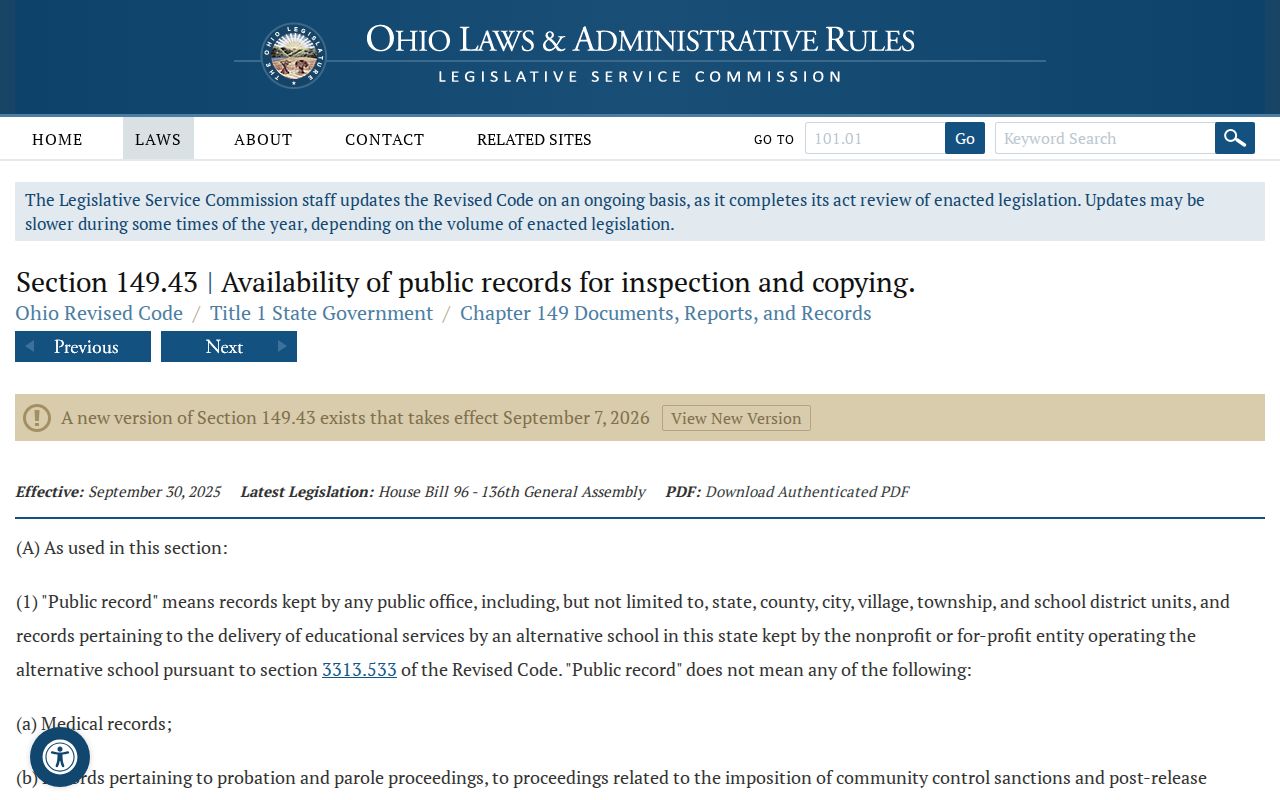
For Pike court records, that public-records baseline runs alongside the court rules. Those rules govern direct access, remote access, redaction, and restrictions.
Inside a Pike County Court Record
What can you expect inside a Pike case file? The public form fields and the rules supply the safe inventory. A case number identifies the file. A docket or register of actions lists court events over time. Filed papers can include pleadings, motions, orders, judgments, and exhibits. Do not assume any of it appears remotely. That includes a document image, party field, charge field, balance, or final-status code.
| Case number | A court identifier. County Court and Probate forms direct users to enter digits only, without letters. |
|---|---|
| Docket or index | A chronological record of filings, hearings, orders, and other case events, not automatically a complete document bundle. |
| Filed paper | A pleading, motion, order, judgment, exhibit, or related case document kept in the court file. |
| Certified copy | A clerk or court-authenticated copy requested from the office holding the original public record. |
| Restricted material | Information withheld, redacted, or limited by rule, statute, or court order. |
Pike Probate Scanning Records
Pike Probate is scanning its older files. The court's ScanWorks notice warns that materials in the project will not be immediately available. Any record caught in that work takes at least five business days to retrieve. The delay is Probate-only. It does not touch Common Pleas or County Court records.
Probate research requests go to probatecourt@pikecounty.oh.gov. Give the case and the record you want. Say whether you need plain or certified treatment. When an older file is out of reach, ask the Probate clerk where retrieval stands. A missing online item is rarely the final word on a Probate record.
Keep the five-business-day warning in perspective. It applies only to Probate files in the active scanning project. It sets no countywide records deadline.
Fees and Certified Copies
One fee schedule does not cover every Pike court record. Common Pleas set its prices in a fee order filed in 2025. It took effect July 1, 2025. Plain copies run $0.25 per page. Certification adds $1. An exemplified copy costs $6. Probate charges $0.10 per plain page. A certified copy there costs $2. The notice it shares with Juvenile sets a $1 minimum for copies. Pike County Court posts no copy prices, so ask that office directly about the cost.
| Office and item | Posted amount | Record-access note |
|---|---|---|
| Common Pleas plain copy | $0.25 per page | Amount in the fee order effective July 1, 2025. |
| Common Pleas certification | $1 extra | Added to the plain-copy charge when certification is requested. |
| Common Pleas exemplified copy | $6 | A higher-authentication copy listed separately by the clerk. |
| Probate plain or certified copy | $0.10 per page; $2 certified | The public-records notice states a $1 minimum for copies. |
| County Court copies | Not located | Confirm a current plain or certified-copy charge with the County Court clerk. |
A certified copy is not just a cleaner printout. It carries the office's authentication, and you can still get it only if the case itself is open to public access.
Pike Remote Record Access Limits
Ohio Sup.R. 45 presumes the public can reach court records. It requires direct access at reasonable times during regular business hours, within lawful restrictions. Remote access is permitted but not promised. No rule guarantees that every case-file item lands on a portal. Pike County Court adds its own timing caution. Online data can lag filings or court action by at least 24 hours or longer. Anything time-sensitive belongs with the clerk of the court that holds the record.
Transcripts sit on another boundary. Pike posts no court-reporter form, rate, or contact for ordering them. Once you have the case and hearing date, ask the individual court about its current reporter or transcript procedure. A clerk cannot supply a service the court has never set up.
Federal records are separate from Pike's state courts. For those, PACER is the official federal docket service. Its PACER pricing information spells out how its fees work.
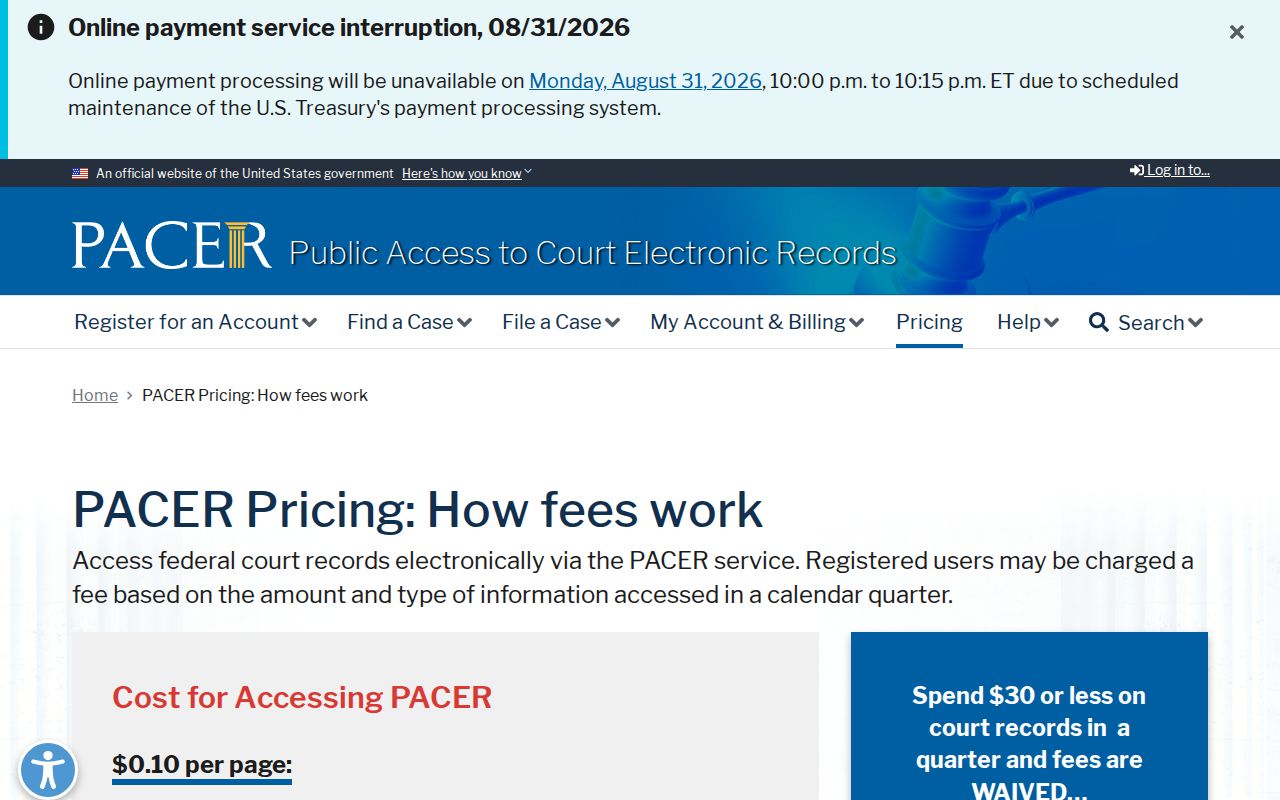
PACER handles federal cases only. It covers matters in the Southern District of Ohio, but it never replaces a record request to Pike County Court, Common Pleas, Probate, or Juvenile.
Sealed Records and Public Access
Access has limits. Sup.R. 44 defines what counts as court records and case documents. The Sup.R. 44 and 45 rules then set the public-access presumption and give a court power to redact or restrict material. Personal identifiers must be omitted or shielded. A no-result search can point to the wrong court, a format problem, posting timing, an access boundary, or a restricted record. It never proves a case does not exist.
Ohio access rules: Sup.R. 44 includes dockets, journals, indices, and case documents within court-record rules. Sup.R. 45 supports direct access while allowing lawful redaction and restriction. R.C. 2953.32 and R.C. 2953.33 govern criminal sealing and expungement paths; R.C. 2151.357 addresses juvenile-record sealing.
Pike Probate records stay open to the public by and large. Adoption and civil-commitment matters are the stated exceptions. Juvenile is the reverse. Most of its records are confidential. The division's technology plan says its online docket covers adult Juvenile cases only. The local public-records notice lays out that division's inspection and copy routes.
The juvenile sealing authority page sets out when a juvenile court may seal a record under this Pike limit.
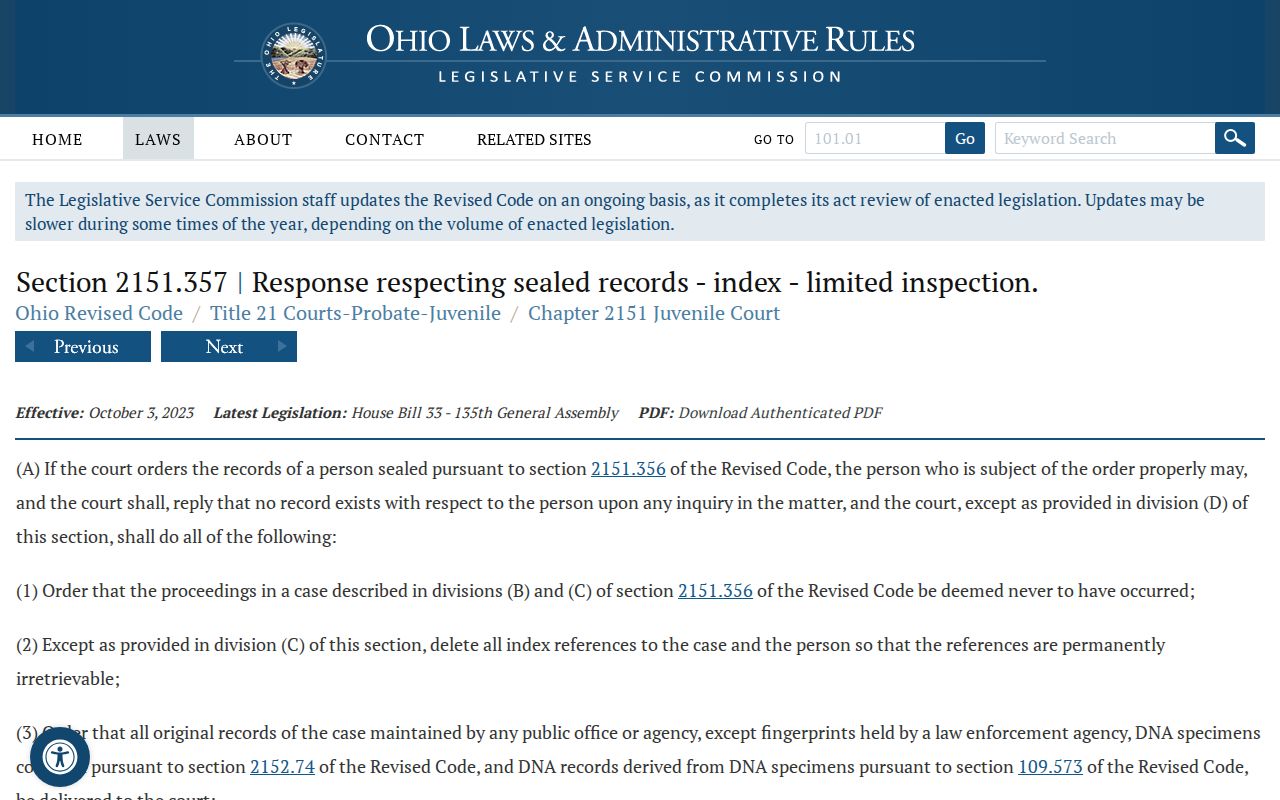
Protected Juvenile material and restricted court documents take their direction from the court that holds them, not from a broader name search.
Specific Pike Court Record Requests
A narrow request gives the clerk a workable start. Name the court first. Add the case number when you have it, along with the party or filing-date context. State the document or docket period you want. Say whether certification is required. For Probate and Juvenile, the official notice permits in-person, mail, telephone, and email routes. Common Pleas and County Court publish no general request form or blanket turnaround rule. Begin with their portal, phone, or counter.
Pike County's record systems help you locate a case and read its context. The originating court still decides what can be inspected, copied, or certified. That division-by-division check keeps a public docket, a public case document, and an authenticated court copy in their proper places.